3 Ways to Get Over Your Doctor-Avoidance-Syndrome

doctor-fears

Let’s face it, I know you’re avoiding me. Even though we both know we have a date (so to speak) you’re playing way too hard to get. I’m talking about your regular wellness check “dates” and I’m acknowledging that a large percentage of you find excuses for – or all-out-ignore – the fact that you need to be checking in with your regular physician, your Ob-Gyn – any other specialist you need to remain in optimal health – on a regular basis, not just when you feel something irregular may be going on.


Here’s something else I know: Fear of the doctor is a normal, common thing.  For some it’s just a little bit of tension, and for others it can manifest into a full-fledged anxiety situation. Making and following through with those appointments isn’t always easy, and I empathize with you, I really do. Going to your doctor’s appointments isn’t the same as a girl’s day at the spa and often we let a lot of anxiety build up (perhaps supplemented by some symptoms Google searching) and all of that can lead you to avoiding your necessary appointments all together.

Well it’s got to stop.  In fact, the way to ensure you spend as little time as possible in any medical offices, is by making sure you go in the first place.  It’s all about prevention! If we work together, now and regularly to keep you in optimal health, you can spend less time with doctor’s like me and more time doing the things you love. The cherry on top is that you’ll be feeling amazing while doing them.

Like I said, I’m human too, and I know fear of physicals, annuals, and other appointments is valid and normal.  But we can’t let it stop us, so to help you break through those feelings I’ve got some helpful suggestions to get you out of your Doctor-Avoidance zone.

If you have any tips that work for you be sure to share them in the comment section below!

#1 Build Your Health “Dream Team”

Your body is your temple, your health is a priority, and everyone working on it should feel the same way.   I want you to spend as much time as needed building a health “dream team” that is filled with doctors and other practitioners who you feel comfortable with, who you trust, who you feel good about, and who you truly feel you can work with and talk with (openly and honestly) about keeping yourself in good health. You truly can like your physicians.  Ask your friends, get on Google, and check with other doctors you’re already seeing for references. Make yourself – and your health – a priority and take the time to assemble a supportive team to rely on. You’ll see that your appointments will quickly become a more positive experience.


#2 Focus on What Motivates You Health-Wise

Instead of letting yourself get fixated on your fears and anxiety-inducing anticipation, start focusing on why you want to be your healthiest self.  I’m talking, make a list and writing down specific, real reasons that keeping your health in check is important. Refer to this list regularly.  Perhaps it’s because you want to be a fit and healthy parent for years to come.  Maybe you want to avoid health problems that your relatives had or have.  Maybe it’s all about looking fine in a leather pencil skirt or swimwear (that’s fine, we all have our reasons).  You may be someone who is just sick and tired of, well, feeling sick and tired, and you’re in need of a major health overhaul.

The key is to put your attention on the Why, why you should be going to the doctor, as well as the positives, what positive benefits you’ll get out of going.

What we focus on expands, so shift your thinking from fear-based thoughts to the rewards of a healthy life supported by professionals that you know, like, and trust.


#3 Take the Mystery Out of Your Healthcare

This is not a case of “ignorance is bliss”. You don’t have to wonder about what’s going on in your body, during your appointments, or before, during, and after a procedure.  Instead of being a bystander while you go to the doctor, take tests, or take in advice your a medical professional is giving you, be sure you understand every part of the process.  Ask questions, and if you still don’t understand something – whether it’s a blood test or a poke or prod – ask about it.  When you begin to demystify what’s going on and why it’s happening, you’ll stop feeding yourself anxiety-inducing hypothetical thoughts and you’ll stop fearing the unknown.  Knowledge is not only power, knowledge is a fear-buster, trust me.

Now it’s your turn:

Do you have any stress or anxiety when it comes to seeing a doctor?  What have you done to tackle it? Share your story or tips in the comments below!
Save

Save

Save

Want to stay on top of breaking health news and receive fun, FREE, sexy tips to stay healthy?
Join Dr. V’s email newsletter.

Posted in #NeedToKnow Comments Off on 3 Ways to Get Over Your Doctor-Avoidance-Syndrome

The Ebola Virus and FACTS YOU Need to KNOW

GUINEA-HEALTH-EBOLA


Over the past week many of us have read headlines that stated two Americans have contracted the deadly Ebola virus! These headlines have quickly led to a lot of fear and confusion.   Could we all here in the US be at risk of contracting Ebola? With the buzz about this outbreak growing I thought it best to address, explain, and clear up any unnecessary worries you may have about the recent Ebola outbreak impacting you. Here’s a breakdown of Ebola facts you should know:

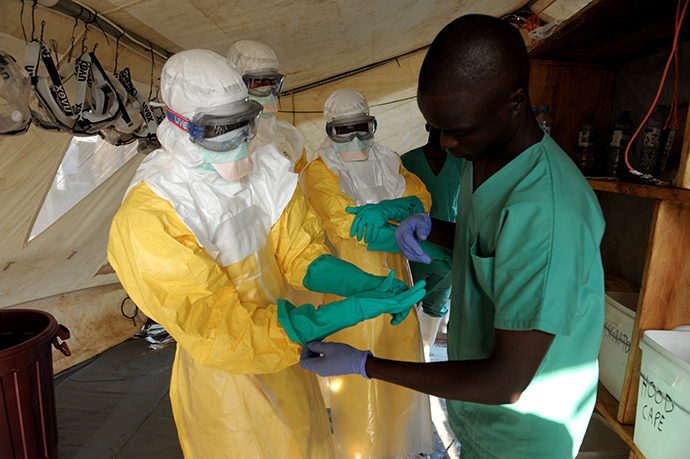
  • First things first – this recent Ebola outbreak hasn’t hit the United States. Though Americans were infected, they are Americans working with Ebola patients in Liberia. These doctors and missionaries are doing noble yet dangerous work, as the Ebola virus is extremely contagious – and unfortunately though they were taking all the possible and necessary precautious these healthcare workers were still infected.
  • The outbreak that is spreading across West Africa is in fact the deadliest Ebola outbreak in history, which is why it’s getting so much buzz and press. It has already killed 670 people, and because it is so very contagious there are fears that those numbers will keep rising.
  • Ebola is a deadly and highly contagious virus. Statistics have shown that it kills 80-90% of those who contract it. And it can be contracted by people who directly come into contact with the virus via blood and other bodily fluids OR even body tissue of those who are infected – whether they are alive or deceased.  Animals that are infected can also pass the disease onto humans and it is also believed fruit bats carry the virus. The advent of air travel has made it possible for the virus to spread faster and farther, as evidenced recently when a Liberian lawyer with the virus flew to Lagos, dying shortly after arrival.
  • Signs of the Ebola virus mirror those of a common cold or flu – sore throat, fever, vomiting, aches and diarrhea as well as red eyes and a skin rash.   These common symptoms usually begin around eight to ten days after exposure.
  • At the moment there is no known cure for the Ebola virus. Treatment is primarily supportive through IV fluid hydration, blood pressure support and pain management.

If anyone you know and love is traveling to an area where Ebola may be a health concern please share with them the facts about this disease! And if they feel ill or have any questions about if they may have been exposed to Ebola definitely encourage them to see a physician or go to the Emergency Room immediately!


Wishing you good health!


Dr. V


Want to stay on top of breaking health news and receive fun, FREE, sexy tips to stay healthy?
Join Dr. V’s email newsletter.

Posted in #NeedToKnow Comments Off on The Ebola Virus and FACTS YOU Need to KNOW

Dr.V’s Summer Bug Bite Guide: Part 1 – Mosquitoes

Mosquito Bite Appearances


Summertime brings families from coast-to-coast outside to enjoy warmer weather, parties, camping, backyard grilling and more. The down side of hanging outdoors is that there’s no escaping insects! In fact did you know that at least 40 people a year die from allergic reactions to stings from bees or other insects, according to the American Academy of Allergy, Asthma & Immunology. Beyond bugs, summer is also peak poison ivy and poison oak season.

Most insect bites and stings and most cases of plant rashes aren’t a big deal and simply require TLC you can administer at home. But some insect bites can be potentially dangerous and require swift action with call to 911.

To help you know when to slather on an anti-histamine and stay at home vs. when to rush to the ER I created a Bug Bites of Summer 2014 Guide that you can read in order to keep your family healthy through the summer months. Read below, and I’ll break down the facts you need to know about Poison Ivy to summer’s most common spiders; as well as give you my doctor’s orders on what to do should you get bitten or stung while enjoying the sun and outdoors. Check out Part 1 below all about mosquitoes and stay tuned for more posts about other insects to avoid this summer.

Mosquitoes

THE FACTS

They’re one of the most common bug bites of summer, and most of the time their bites just cause itchy red spots. In your average case it’s key to just avoid scratching as much as possible, which is easier said than done but will truly make a difference.

Some mosquitoes can carry West Nile virus, which is a potentially serious (though not contagious), illness. The majority of cases of West Nile Virus appear between July and September in Midwestern and Southern states. This illness can appear anywhere from 3-14 days after being bitten. Most people who contract West Nile Virus don’t usually have mild symptoms that are self-limited and resolve. However, if you develop symptoms that include a stiff neck, muscle weakness, fever, headache, body aches, nausea or a rash on your torso, you should call the doctor! It is possible in severe cases of West Nile virus to have neurological issues, paralysis and even death. Therefore, it’s important to be aware of how your body feels and if you suspect things aren’t “right” check in with your healthcare provider immediately.

New on the scene this year is Chikungunya. It’s a virus carried by mosquitoes that’s been around since the 1950s in Africa and the Caribbean and now it’s hit the US, much like West Nile virus did 10 years ago, thanks to US tourists returning home from vacations. The interesting thing about this disease is the type of mosquito that carries it. Unlike most mosquitoes who appear and bite us from dusk to dawn, the mosquitoes that carry Chikungunya are the same mosquitoes that carry Dengue Fever and they bite during the daytime! So how can we avoid these annoying bugs. Well read on.


DOCTORS ORDERS:

To avoid mosquitoes, always use mosquito repellent! Now you have some choices. I recommend and so does the CDC wearing a an Environmental Protection Agency-registered insect repellent for your skin and clothing that has DEET or Picaridin. Now the higher the concentration (percentage) of DEET in the product the longer it will last and work. If you prefer to use an allnatural product that is DEET-free, which I would recommend for kids and pregnant women try oil of lemon eucalyptus.

Another must – STAY away from mosquito “homes” and prevent them from hanging out around yours! This means – avoid standing water, keep your gutters unclogged, don’t over soak potted plants. Mosquitoes LOOVE water, and even a capful from a water bottle is enough to have hundreds buzzing and breeding and ready to bite you.

If you find yourself in mosquito rich places make sure you wear protective clothing – long shirts and pants!

There’s no vaccine or specific antiviral treatments for West Nile or Chikungunya virus. But over-the-counter pain relievers can be used to reduce fever and relieve other symptoms.


BONUS TIP:

Mosquitoes are often lured in by sweat, alcohol, perfumes and dark clothing- so avoid these if you can!

Wishing you a bug free summer

xo

Dr. V


Want to stay on top of breaking health news and receive fun, FREE, sexy tips to stay healthy?
Join Dr. V’s email newsletter.

Posted in #NeedToKnow Comments Off on Dr.V’s Summer Bug Bite Guide: Part 1 – Mosquitoes

THE MERS VIRUS – WHAT YOU NEED TO KNOW TO STAY HEALTHY


MERS – Middle East Respiratory Syndrome

 OK – First it was SARS back in 2003 and now we’re hearing about MERS. What are these four letter words all about?  If you have been watching the news then you have probably heard the term MERS but you may not really know the ins and outs of what it is. So, I’m here to share the details that you NEED to know about MERS to keep YOU and YOUR family healthy especially since it’s touched down in the United States.

1) WHAT IS MERS?

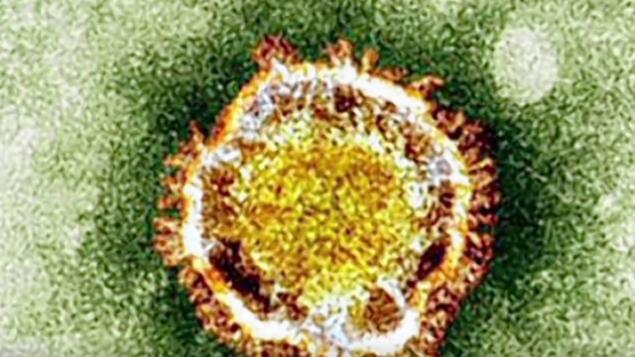
MERS is Middle East Respiratory Syndrome. It is called a coronavirus (MERS-CoV), a virus in the same family but slightly different than SARS because it has spikes on it that resemble a crown. MERS was first discovered in September of 2012 and cases are continuing to be identified. Globally, from September 2012 to date, the World Health Organization (WHO) has been informed of more than 250 cases of laboratory-confirmed cases of MERS, and more than 90 deaths from the virus. 


2) WHERE DID IT START?

The virus was originally detected in 2012 in Saudi Arabia. Initially cases were linked to countries in the Arabian Peninsula, and confirmed in Saudi Arabia, United Arab Emirates (UAE), Kuwait, Qatar, Oman, Jordan, Tunisia, Italy, France, United Kingdom (UK), Greece, and Malaysia. The virus was renamed in May of 2013 by the International Committee on Taxonomy of Viruses to the Middle Eastern Respiratory Syndrome (MERS).


3) HOW EASILY IS IT SPREAD?

The presence of MERS is relatively new and as health professionals we are learning more about it everyday. The Centers for Disease Control (CDC) and WHO believes however, that it is NOT as easy to contract MERS, compared to other viruses like the flu or common cold because it grown deeper in the respiratory tract vs. the nose or upper throat.

We live in a global community and people can travel easily all over the world in a short period of time. Which means, now we have now seen MERS here in the United States. As of May 20th, 3 cases have been confirmed. The first two were linked to healthcare workers who were in Saudi Arabia and they themselves travelled to the US. The most recent third case is of an Illinois businessman who took meetings with an individual who was unknowingly infected. Therefore, this third patient who has reported MERS, did not actually travel to the Middle East himself, but caught the virus here from a person who had recently travelled from the Middle East.

 The CDC has reported that they tested 50 people who came in contact with the person who infected the Illinois businessman and no others were affected. Also the Illinois businessman had two separate meetings with the infected person, and perhaps had significant exposure during that time.


4) HOW DID IT GET TO THE US?

The presence of foreign healthcare workers in the Arabian Peninsula may provide the most significant means of spreading MERS outside the Middle East. Similar to SARS many years ago, healthcare workers who provide care to sick people can become infected and then travel overseas and infect people in the US. Therefore, it’s extremely important to identify people with the virus and keep them from spreading it to others.


5) WE’VE BEEN TOLD THE SITUATION IS “SERIOUS” BY THE CDC, HOW SERIOUS IS IT? HOW WORRIED SHOULD WE BE?

To date, the CDC and WHO have said that MERS is not a serious concern for public health at this time. What IS important is for every individual to be aware of how the virus is transmitted so you know how to prevent it.

 In preparation of US cases, in 2013 the CDC developed and distributed a test kit for MERS to state health departments. Also for each suspected or confirmed case the CDC assigns people to track down contacts of each patient and test them as well.


 6). WHAT ARE THE SYMPTOMS OF MERS?

 There is a wide range of symptoms of MERS, which are similar to that of any other common cold or flu virus:

  1. Fever more than 100.4°F
  2. Cough
  3. Chills and body aches
  4. Headache
  5. Non-productive cough
  6. Shortness of breath

 Other symptoms can include:

  1. Sore throat
  2. Nausea and vomiting
  3. Dizziness
  4. Diarrhea
  5. Vomiting
  6. Abdominal pain.

If you or a loved one has any of those symptoms AND travelled from countries in or near the Arabian Peninsula OR has had close contact with a person who has travelled to the Arabian Peninsula and developed fever and a respiratory illness within 14 days after traveling immediately call your doctor or go to the Emergency Room.


7) IS THERE A TREATMENT OR VACCINATION FOR MERS?

At this time there is no specific treatment for MERS. Treatment is supportive, just as it would be if you were diagnosed with a common cold or the flu:

  1. Fluids
  2. Rest
  3. Stay away from people who are sick
  4. Cover your mouth and nose if you cough or sneeze.


8) HOW CAN I PROECT MYSELF AND MY FAMILY FROM MERS?

The MERS virus – which has similar symptoms to common upper respiratory tract infections such as influenza and the common cold can be prevented in much the same way as any other virus.

  1.  Hand hygiene is the most important way to prevent the spread of the virus. Wash with soap and water for 60 seconds or use an alcohol –based hand gel to clean hands.Cover your mouth and nose with a tissue when you cough or sneeze. Or you can cough into your sleeve as a way to reduce exposure of virus into your hands. This is important because every time you cough droplets can spread up to 6 feet.
  2.  Avoid touching your eyes, nose and mouth with unclean unwashed hands.
  3.  Avoid close contact with sick people. Do not share drinks, eating utensils, or kiss sick people.
  4.  As often as needed disinfect surfaces that sick people come in contact with, such as doorknobs, kitchen and bathroom surfaces, and toys.
  5.  If you are ill DO NOT go to work and avoid crowded places such as malls and grocery stores.


Health officials at the CDC and WHO have said that the MERS virus is not as contagious as the flu or common cold but awareness is key to prevention.

And remember if you or a loved one has travelled to the Middle East or come into contact with someone who has travelled to the Middle East and within 14 days of returning have fever with cough or shortness of breath seek immediate medical care. Call ahead to your doctor and let them know your symptoms and also that you have recently travelled so they can take appropriate prevention measures at the office.


Wishing you good health.

Dr. V


(Photo Credit on home page from Reuters)


Want to stay on top of breaking health news and receive fun, FREE, sexy tips to stay healthy?
Join Dr. V’s email newsletter.

Posted in #NeedToKnow Comments Off on THE MERS VIRUS – WHAT YOU NEED TO KNOW TO STAY HEALTHY

Why and How I’m Committed to Your Health

stockphotopro_2554796ugw_no_title

When I decided to take my role as Dr. V from behind hospital walls and share my message and health information with all of you on a more public stage, I knew I was in for an adventure, and boy was I right! One of the most exciting parts of my journey has been discovering new ways to share the truth about everything from medical conditions to illness prevention tips via so many different platforms. This month was no exception! Highlights during April included sharing my thoughts on Miley Cyrus’ possible heart condition with In Touch Magazine as well as breaking down hot health topics in the news into summaries that actually made sense (in plain English) on The Couch morning show on CBS. I’ve even enjoyed curating health and wellness articles and news you should know via my social media feeds as well as writing articles about issues that I want to talk to you about myself via my blog.

Though the modes that I share medical scoop with you in today’s modern age vary, the heart of my mission is always the same: I want to deliver you fresh, relevant and relatable content, advice and input that will help you live happier and healthier lives! I want to take the fear out of your physicals and make you brave about your body again.

Keeping you on the path to better living is something I’m passionate about and committed to, and I want to keep finding ways to better serve you. As part of that mission I’ll be answering your burning health and wellness questions via video this coming spring and summer. Have a question you want answered? Tweet me at @askdrv or email me at doctorv@askdoctorv.com and I’ll do my best to answer it in the format that will best serve you and others out there who probably have the same questions!

Remember, the more you know about your body and your health the better you can take care of it! Let’s stay connected and commit to feeling good inside and out together!

XO

Dr. V

Want to stay on top of breaking health news and receive fun, FREE, sexy tips to stay healthy?
Join Dr. V’s email newsletter.

Posted in #NeedToKnow Comments Off on Why and How I’m Committed to Your Health

Why Do Paper Cuts Hurt So Much, Is Breaking the Seal Real & Other Health Questions Answered…

Thinking concept

OK we have all wondered why do paper cuts hurt so much?  Does celery really count as “negative calories”?  Is “breaking the seal” when you have to go to the bathroom all in your head?  Oh so many health questions so many Americans ask themselves from time to time…let’s finally answer them!  It’s time to solve some everyday health mysteries!  Sure one can talk about high brow medical issues all day long but what about the health questions, myths and curiosities so many of us actually wonder or mistakenly believe on a regular basis?  Let’s get them answered!


Why do paper cuts hurt so much?

There are a couple of reasons why paper cuts are so painful and irritating.  The first reason is their physical makeup:

  • Your hands and fingers are great sensors and guides for your body.  They are packed with nerve fibers called nociceptors.  These fibers can sense temperature, pressure and pain, and there are more of them per square inch in your hands and fingers than most other parts of your body.
  • These nerve endings are handy when warning you of a hot door or itchy sweater. But it also means you’ll notice it a lot more when you hurt yourself – because they’re sending lots of pain signals to your brain.
  • Next reason?  The type of cut.  Sure a paper cut is much better than a deeper cut, but because it’s shallow. But since it’s not a deep cut it may not clot or even bleed much at all. Which means that that cut is constantly exposing nerves to the air – which means more “ouch”!
  • Also, you simply use your hands and fingers more than most parts of your body on a daily if not every-minute basis.  Couple that with the density of sensors in those areas and you’re in for an irritating post-paper cut feeling.


Does celery really count as “negative calories”?

If you’ve ever been on a diet – or had someone in your family who was – you may have heard them talk about how they’re sticking to celery for snacking because of it’s negative calories.  So is this fact or fiction?

  • First let’s clear up what they mean by negative calories.  It’s what people say when they mean that the food takes more calories to eat and process than it actually has in a serving.
  • In truth “negative calorie” foods don’t exist because of the definition of what a calorie actually is and how it works. Calories wasted while processing foods are already considered in calculating the Thermic Effect of Food (TEF) – meaning the amount of energy it takes to metabolize the food.  TEF usually wastes about 10% to 20% of calories, which means a 10-calorie stalk of celery wastes 2 calories to deliver 8.   Not a major impact on your diet or “points.”  Even if you did end up spending more calories than you took in the effect would be too small to measure!
  • At the end of the day “free foods” and “negative calories” are often used by dieting programs and magazines to make you feel better about increasing your intake of good fruits and vegetables that are made up mostly of water and fiber.
  • Basically – if you substitute celery and cucumbers and other “negative calorie foods” for your usual cookies and cakes, sure you’ll lose weight but you aren’t going to drop dress sizes by chewing celery all day long!


Why do onions make you cry?

We’ve all experienced the moment when we cut into an onion and within seconds our eyes well up and we begin to cry – I fact It only takes about 30 seconds to start crying after you make the first cut, that’s the time needed for syn-propanethial-S-oxide formation to peak.  Syn what?  Here we go – get your science hat on!

  • When you cut into an onion, its ruptured tissues release all sorts of goodies, like enzymes and amino acid sulfoxides. The enzymes breaks the amino acid sulfoxides into down into sulfenic acids.
  • These acids are unstable and spontaneously rearrange into acidic compounds called thiosulfates, which produce a pungent odor. And these acids liberated are also converted by into a gas called syn-propanethial-S-oxide, also known as the Lachrymatory (Crying) Factor.
  • This “Crying Factor” (Syn-propanethial-S-oxide) moves through the air and reaches our eyes. The first part of the eye it meets, the cornea, is filled with fibers that lead to the lachrymal (tear) glands. When Crying Factor (syn-propanethial-S-oxide) is detected, all the fibers in the cornea start firing away and tell the glands to wash the irritant away.
  • Before you know it your eyes automatically start blinking and producing tears, which flushes the irritant away.
  • Another problem when cutting onions?  Our reaction to our tearing, burning eyes is to rub them, which only makes things worse since our hands also have some syn-propanethial-S-oxide – the Crying Factor – on them.
  • How to prevent this problem?  Some people actually wear “onion cutting goggles” to minimize this effect!  You can also refrigerate your onion before cutting it, which slows the chemical reactions that lead to your tears!


Is “breaking the seal” when you have to use the bathroom an actual medical phenomenon?

Now this is a phrase that gets popular when you are in college or “of age” to drink and refers to the fact that if, when drinking, you go to the bathroom and “break the seal” you will then have to go to the bathroom quite frequently.

  • Part of what makes you pee so much while boozing is that alcohol inhibits antidiuretic hormone (ADH). ADH is made in the part of the brain called the hypothalamus, and stored and released from the pituitary gland at the base of the brain. Its job is to conserve water in the body by reducing its loss via your urine.
  • Alcohol messes everything up and blocks certain nerve channels that help get ADH circulating in your bloodstream. Without ADH conserving water, the kidneys don’t reabsorb water as easily and excess water winds up getting dumped into your urine to leave the body.
  • With alcohol keeping ADH from doing its job, you produce a lot more water-diluted urine, which fills the bladder quickly and makes you have to pee more often.
  • So, there’s really no seal to break and in fact the moment you took your first drink and started suppressing your ADH, was when that imaginary seal started breaking!
  • ALSO, for many people alcoholic beverages can be a bladder irritant. And carbonation in drinks like beer and champagne can cause gas and pressure that contributes to that irritation. As your bladder fills up after that initial drink, all that pressure can create a very strong urge to pee more and make your bladder feel fuller than it really is, sending you running to the bathroom over and over again throughout the night.
  • Thus the legendary seal was and is broken in your mind, but it’s really just your body dealing with your alcohol intake!


Why do beans give you gas?

This is a popular question doctors receive.  Why is it that we don’t get gas when we eat things like rice or pancakes but we do get it with beans (not to mention cabbage, onions and other gas-inducing foods).

  • The answer lies in sugars believe it or not!  These foods are naturally sweetened by a family of sugars called oligosaccharides. These sugars are big molecules that your body cannot easily break them down in the small intestine and digest and process them.
  • This means they move through the gastrointestinal (GI) tract and into the large intestine still intact and bearing valuable nutrients.  So bacteria in the large intestine chows down on these large sugars, and as they do they release gas in return.
  • Eventually this gas has to be let out of your body and  … voila! It is via you passing gas.
  • Bonus info: Why does your gas smell?  In truth the gas you produce in your intestines is actually odorless!  Sulfur is the substance that causes gas to have an odor. Therefore, eating foods that are high in sulfur, such as garlic, onions, leeks, broccoli, cauliflower, cabbage and Brussels sprouts, are what cause foul-smelling gas.


Why do spicy foods make my nose run?

You know how it goes – you bite into something spicy like a chili pepper, wasabi or hot curries and your nose begins to run – what’s up with that?

  • The answer can be given in one word: Capsaicin.
  • Capsaicin is the chemical found concentrated in the tissue of peppers. Similarly allyl isothiocyanate is an oil contained in plants like mustard and radishes (including horseradish).
  • Plants use both of these chemicals as biological weapons against predatory animals.  However, when we consume them they act as an irritant, produce a burning sensation, and when ingested cause our mucous membranes to become inflamed and go into defense mode. And our body’s defense is to produce mucous in our nasal passages in order to get any irritants out of our respiratory system.
  • Some more important scoop?  Some people think that spicy foods are great for a cold because they clear their sinuses. Though spicy dishes and foods may cause temporary relief, don’t be fooled!  When the effect wears off you’ll be back to feeling plugged up, because given the way Capsaicin and allyl isothiocyanate work you’ll have worked up even more mucous!


Have any health questions that are keeping you awake at night?  Email them to me at doctorv@askdoctorv.com and you might just have them answered in an upcoming blog post or video!

Want to stay on top of breaking health news and receive fun, FREE, sexy tips to stay healthy?
Join Dr. V’s email newsletter.

Posted in #NeedToKnow Comments Off on Why Do Paper Cuts Hurt So Much, Is Breaking the Seal Real & Other Health Questions Answered…